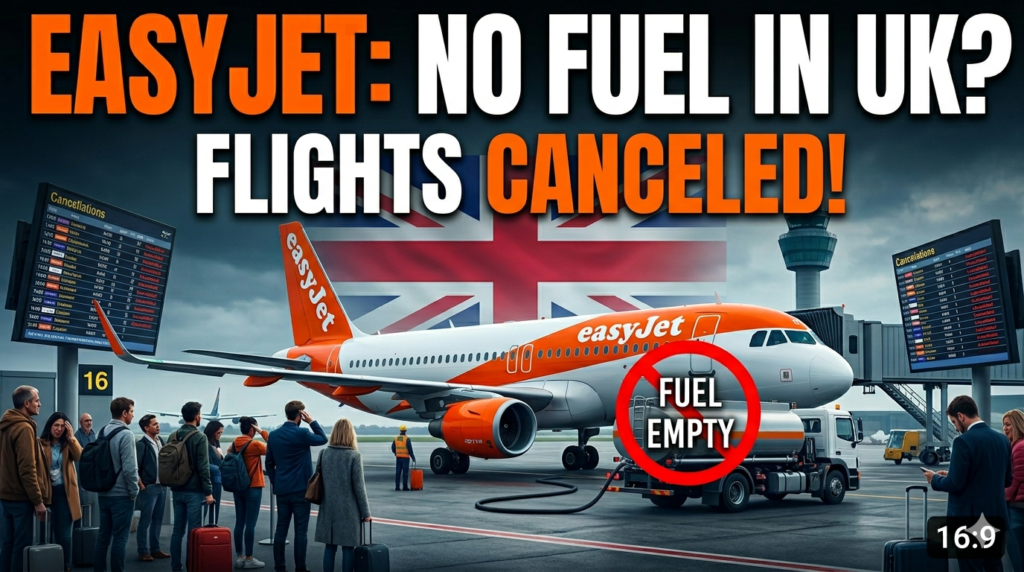
The aviation industry is once again facing turbulence—not in the skies, but on the ground. The EasyJet fuel shortage has become a major concern in 2026, leading to delayed flights, operational disruptions, and growing anxiety among passengers. But what’s really causing this issue, and how serious is it?
Let’s break it down in a simple, human way so travelers and readers can fully understand what’s happening.
Why is the UK running out of jet fuel?
One of the biggest questions people are asking is: Why is the UK running out of jet fuel?
The issue isn’t that fuel has completely disappeared. Instead, it’s a mix of:
- Supply chain disruptions
- Refinery maintenance and shutdowns
- Increased travel demand post-pandemic
- Logistics bottlenecks at major airports
For airlines like EasyJet, even a small disruption in fuel supply can create a ripple effect, leading to delays and rescheduling.
How many weeks of jet fuel does Europe have left?
Another common concern is: How many weeks of jet fuel does Europe have left?
Europe typically maintains strategic reserves, but these are not meant for long-term commercial aviation use. Experts suggest:
- Europe generally holds a few weeks’ worth of aviation fuel reserves
- Supply depends heavily on imports and refinery output
So while there is no immediate panic, tight supply conditions can still disrupt airline schedules.
Will the UK ever run out of gas?
You might wonder: Will the UK ever run out of gas?
The short answer is: unlikely.
However:
- Temporary shortages can happen
- Energy dependency on imports creates vulnerability
- Geopolitical tensions affect supply
So while a complete shutdown is rare, short-term crises like the EasyJet fuel shortage are very possible.
Does Europe have jet fuel?
Yes, Europe does produce and store aviation fuel. But the real question is: Does Europe have jet fuel in sufficient quantity?
The challenge is:
- Demand is rising faster than supply
- Some countries rely on imports
- Refinery capacity is limited
This imbalance is one reason airlines are struggling.
Can a plane fly 30 hours without refueling?
A fascinating question tied to fuel concerns is: Can a plane fly 30 hours without refueling?
In reality:
- Most commercial planes cannot fly 30 hours non-stop
- Ultra-long-haul flights last around 18–20 hours max
- Fuel capacity and weight limits restrict duration
This is why reliable fuel supply at airports is critical for operations.
Will we run out of oil by 2050?
Another broader concern: Will we run out of oil by 2050?
Experts say:
- Oil reserves still exist globally
- But accessibility and cost are increasing
- Transition to renewable energy is accelerating
So it’s less about “running out” and more about changing energy systems, which impacts aviation fuel availability.
What country burns the most fuel?
When looking at global consumption, people often ask: What country burns the most fuel?
The answer:
- The United States consumes the most fuel overall
- Followed by countries like China and India
High consumption puts pressure on global fuel supply chains, indirectly affecting airlines worldwide.
Why don’t the US use diesel?
Another interesting question: Why don’t the US use diesel?
In aviation and transportation:
- The US prefers gasoline for most vehicles
- Diesel is used but less popular for passenger cars
- Aviation fuel is a specialized form of refined petroleum
Different fuel preferences across countries influence global refining priorities.
How does an airplane hold 60,000 gallons of fuel?
Many people are surprised to learn how planes store fuel. So, how does an airplane hold 60,000 gallons of fuel?
Here’s how:
- Fuel is stored inside the wings
- Large aircraft use multiple fuel tanks
- Advanced systems balance weight during flight
This massive fuel requirement shows why even small shortages can disrupt operations.
Why did Russia stop giving gas to Europe?
A major geopolitical factor is: Why did Russia stop giving gas to Europe?
Key reasons include:
- Political tensions and sanctions
- Energy policy conflicts
- Strategic control over resources
This decision has significantly impacted Europe’s overall energy supply, including fuel availability for aviation.
Final Thoughts
The EasyJet fuel shortage in 2026 is not just about one airline—it reflects a broader global issue involving energy supply, geopolitics, and rising demand.
For passengers, this means:
- Expect occasional delays
- Stay updated with airline notifications
- Book flexible tickets when possible