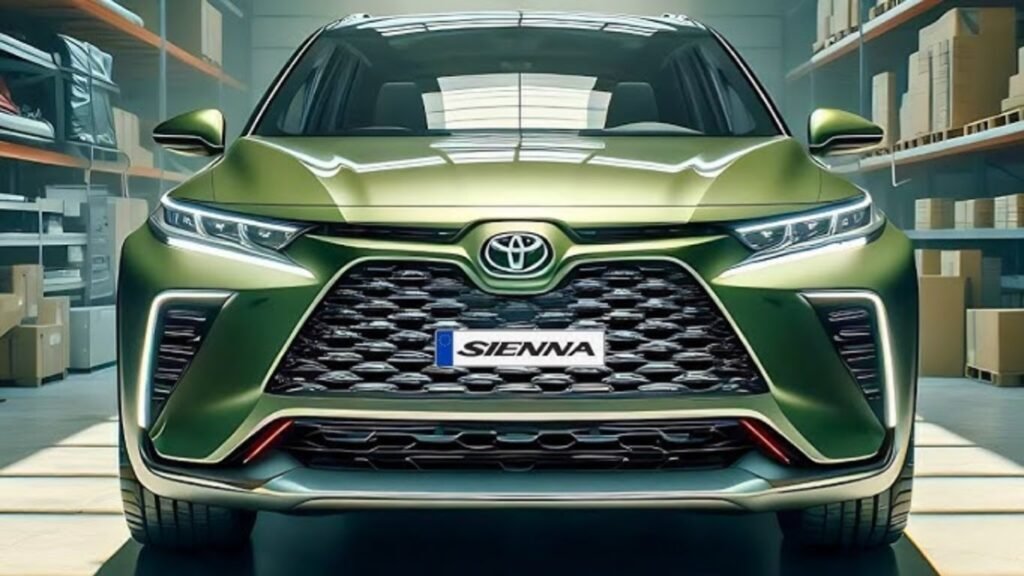
When Toyota unveiled the 2025 Sienna, many observers expected a safe evolution — updated styling, filler features, incremental tweaks. But what emerged is bolder: a minivan that doesn’t just carry families but pampers them on long journeys. It aims to feel like a private lounge on the highway. In this detailed article, we will explore every facet of the Toyota Sienna 2025 — from features and interior to hybrid performance, mpg, price, release date, reviews, safety features, and specs — and assess whether Toyota has truly redefined the minivan.
Reinventing the Minivan
Minivans historically win on practicality — space, sliding doors, easy loading — but often lose on desirability. Many buyers shifted toward SUVs and crossovers seeking style, prestige, and driving appeal. With the 2025 Sienna, Toyota set out not just to keep the practicality, but to inject a sense of refinement, calmness, and comfort rivaling premium SUVs. The goal: let your family travel in a serene, comfortable space rather than a functional “people mover.” The ambition: a true 7‑seater that feels like a private lounge.
To deliver this, Toyota made some bold choices: hybrid only, advanced interior materials, better sound insulation, refined ride tuning, and optional all‑wheel drive. Let’s see how deep the transformation goes.
Release Date & Launch Timing
The Toyota Sienna 2025 release date was essentially staged in late 2024 in many markets, with deliveries extending into early 2025. Toyota announced the new model ahead of time, giving dealers time to take orders and ramp up inventory. This 2025 version is more of a full, substantial refresh rather than an all-new generation. Toyota likely intends to carry it for several years, with incremental updates, before the next generational leap.
Powertrain & Efficiency
One of the most significant steps Toyota took is that the Toyota Sienna 2025 hybrid is the only powertrain offered — there is no stand‑alone gas engine. This signals Toyota’s confidence in hybrid technology even for a large family vehicle.
Engine + Motor Setup
The hybrid system combines a 2.5 L inline‑4 gasoline engine with electric motors. Together, they produce about 245 horsepower and around 176 lb-ft of torque. Toyota uses a planetary gearset architecture with an electronic continuously variable transmission (e CVT) to manage power flow smoothly across driving conditions.
All-Wheel Drive (AWD) Variant
Toyota also offers AWD in many trims, which is implemented via a rear electric motor. In typical highway cruising, the system operates in front-wheel drive to preserve efficiency and only activates the rear motor when extra traction is needed. This gives drivers more confidence in rainy or slippery conditions without sacrificing too much economy.
Performance Character
Don’t expect aggressive acceleration or sporty dynamics — this is a hybrid tuned for refinement. Yet, with the 245 hp system, passing on highways, merging, or carrying a full load still feels composed and confident. The hybrid system accentuates smoothness, quietness, and gradual responsiveness over abrupt thrills.
Exterior & Styling
Toyota redesigned the 2025 Sienna with the goal of shedding minivan stereotypes and moving toward a more upscale, expressive appearance.
Front Fascia & Grille
The front fascia is sharper, with a more aggressive yet elegant grille design that hints at Toyota’s premium design language. The face is no longer bland — it has presence. Headlights are slimmer, more integrated, giving the van a sleeker look.
Side Profile & Doors
The sliding door tracks are hidden more cleanly, giving smoother side panels. Sculpted shoulder lines, subtle creases, and well‑integrated bodywork elevate the visual interest. The wheels are more stylish, with optional multi-spoke designs available on higher trims.
Roof & Proportions
Roof rails are available for extra utility (e.g. roof boxes, crossbars). The overall dimensions aim to retain the generous interior footprint while keeping the exterior manageable for day‑to‑day driving and parking. The long wheelbase provides stability and smooth ride. The proportions are composed: not overly tall, but comfortably wide.
Interior Transformation
This is where Toyota’s boldest leap lies — making the cabin feel less like a van and more like a serene lounge.
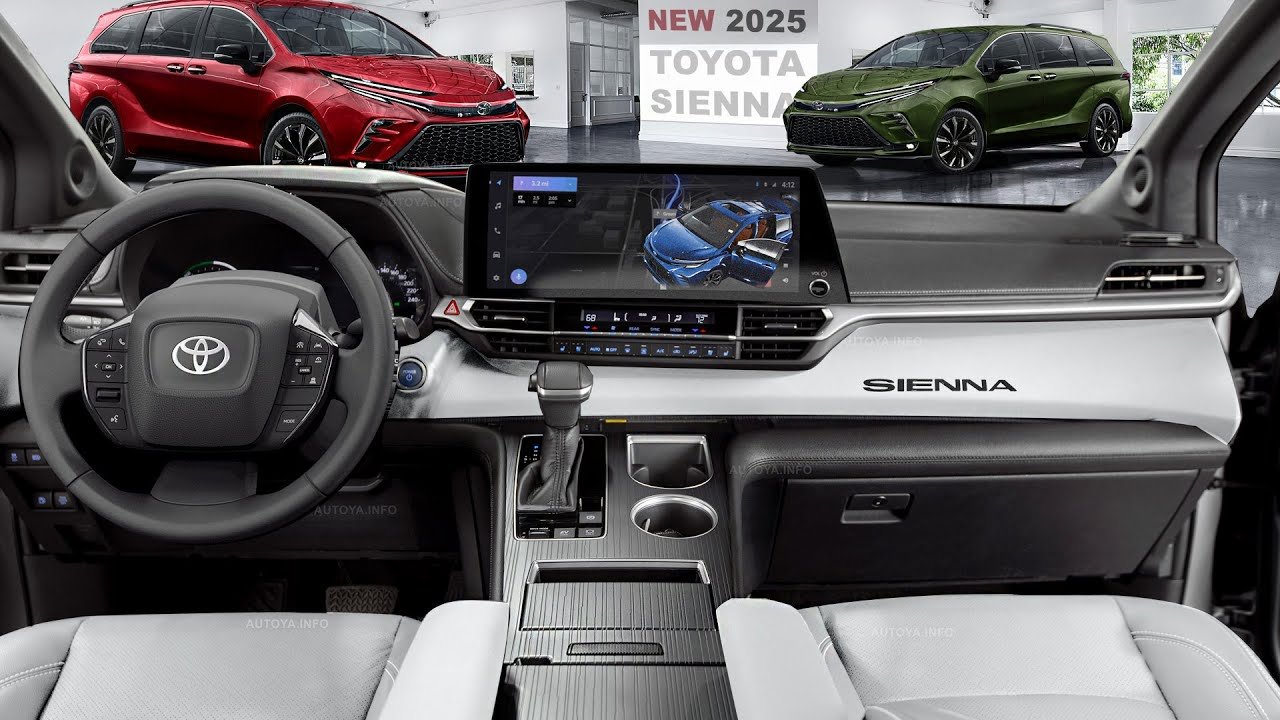
Materials & Fit & Finish
Across all trims, Toyota upgraded surface materials. Softer touch panels, refined textures, contrast stitching, and better visual coordination of trim elements elevate the cabin feel. On higher trims, genuine or high-quality synthetic leather is used, with premium stitching, accent trims, and more elegant detailing.
Seat Comfort & Layout
The Toyota Sienna 2025 interior has balancing space and comfort for up to seven or eight occupants. The 7‑seater layout typically uses second-row captain’s chairs, giving more comfort and easier third-row access. The optional 8-passenger version uses a bench in the second row. Headroom and legroom are generous in all rows, and Toyota sought to reduce noise, vibration, and harshness (NVH) to let conversation, music, and calmness reign.
Special Features & Amenities
To enhance the “lounge” feel, Toyota introduced a more intelligent rear seat reminder system that senses occupants (children/pets), not just based on door opening. On top trims, niceties such as a built-in vacuum, a small refrigerator box (“Fridge Box”), ambient lighting, advanced climate control zones, and enhanced trim options are either standard or optional. These help the Sienna feel less utilitarian and more pampering.
Practical Storage & Convenience
Toyota placed abundant storage solutions throughout: deep cubbies, bins, pockets, cup holders, and clever compartments. Charging ports (wired and wireless) are plentiful. The dashboard layout is cleaner and more user‑friendly, with better ergonomics and intuitive control layouts. Overall, usability was not sacrificed for design — Toyota aimed to blend both.
Seating Flexibility, Cargo & Real‑World Use
To truly feel like a highway lounge, the Sienna must also be practical and flexible.
Seating Configurations
The Sienna offers 7‑passenger or 8‑passenger seating, depending on trim and options. The 7‑seat version uses second-row captain’s chairs, which improves comfort for those in the middle rows and gives better aisle access. The 8‑seat variant, with a bench in the middle row, prioritizes maximum occupancy.
Access & Stowage
Toyota refined sliding door operation and clearance so entering/exiting the third row is easier than in many vans. The third row folds nearly flush into the floor (in many trims) to allow a flat cargo area when needed. The ease of folding and unfolding seats was improved to reduce physical effort.
Cargo Capacities
With all seats upright, cargo space behind the third row is adequate for everyday luggage and groceries. Folding down the third (and possibly second) row(s) produces a large, flat cargo area suitable for big loads, camping gear, or moving large objects. Toyota’s stated maximum cargo capacity (when seats down) competes favorably in the class.
Real-World Utility
The goal is a vehicle where families can load strollers, sports gear, luggage, grocery runs, and still travel in comfort. While the Sienna may not match the absolute maximum box‑van cargo volume, its layouts and ease of use tend to outshine more “rugged but less refined” alternatives.
Infotainment, Connectivity & Technology
Modern journeys demand modern tech, and the 2025 Sienna integrates a suite built to support connectivity, comfort, and entertainment.
Screen Options & Interface
Lower trims come with a modest screen (e.g. 8‑inch), while mid and high tiers feature a larger, panoramic display (e.g. 12.3‑inch). Instrument clusters are more digital and feature-rich in higher trims, offering contextually adaptive displays. The infotainment interface is responsive, logical, and supports wireless Android Auto and Apple Car Play.
Connectivity & Passenger Features
There are multiple USB (including USB‑C) ports in each row, wireless charging pads, and optional in‑vehicle WiFi to keep backseat occupants connected. The intelligent rear seat sensing system helps alert drivers if someone is left behind. In premium models, extras like built-in vacuum, small fridge boxes, ambient lighting, and multiple climate zones amplify the lounge ambiance.
Usability & Experience
Users find the larger screens responsive, with crisp graphics. Some note that extreme side angles (on wide screens) may feel slightly out of reach for certain controls, but overall the system is intuitive and blends well with the overall interior design. The tech is not just bolted in; it is integrated to support comfort, not distract.
Safety & Driver Assist
Safety is nonnegotiable for a family‑oriented vehicle, and the 2025 Sienna is equipped with many modern driver aids — though some limitations exist.
Standard Driver Assistance
Across most trims, the Sienna includes blind-spot monitoring, lane departure warning, lane-keeping assist, and rear cross-traffic alert. Toyota’s signature safety suite is present — though interestingly, the Sienna continues with an earlier version (e.g. Toyota Safety Sense 2.0) rather than the very latest iteration found in other models. Additionally, the enhanced rear seat reminder system helps detect forgotten occupants.
Structural Safety & Crash Protection
While detailed crash test results for 2025 are still emerging, Toyota’s reputation for structural integrity remains. The Sienna’s reinforcements, crumple zones, restraint systems, and overall build are aligned with modern standards, and the added driver aids help in real-world accident prevention.
Criticisms & Reported Issues
Some owners noted anomalies: occasional steering or electrical glitches in very early units, or HVAC anomalies (e.g. rear seats receiving less heat in cold conditions) in certain configurations. Also, the absence of the most recent Toyota safety suite (TSS 3.0 or beyond) is a mild disappointment to tech‑aware buyers. Some forum reports also mention longer-than-expected delivery wait times in certain markets.
Driving Impressions
A 7‑seater with lounge ambitions must also deliver on the road — quiet, composed, just engaging enough.
Ride & Comfort
The suspension tuning is aimed at smoothing out real-world road irregularities rather than delivering sporty feedback. Users frequently comment on the quiet cabin, minimal wind or road noise intrusion, and a composed highway ride. The long wheelbase contributes to stable motion and a “floating” feel over undulations.
Power Delivery & Acceleration
Under typical driving loads, the hybrid system delivers smooth and ample power. The Sienna handles merges and overtakes with confidence. Because it’s not tuned for aggressive performance, drivers won’t feel sudden bursts of torque, but rather a consistent, gentle push that matches the vehicle’s character.
AWD Behavior & Traction
The AWD system integrates gracefully — the rear motor activates when slippage is detected or when torque distribution is beneficial. Most of the time, the Sienna cruises in front-wheel drive to maintain efficiency, but drivers note the extra traction confidence under rain, snow, or slippery surfaces.
Steering & Handling
Steering is tuned for ease, predictability, and comfort more than sport. It’s composed and reassuring, not sharp or eager. Some rare complaints exist of early electronic steering problems in a few units, but for most drivers, the system behaves reliably and transparently. The Sienna is not meant for twisty roads or performance driving — its strength is in highway composure and comfort under load.
User Observations
Owners often mention:
-
The third row is usable but less comfortable for adults on long trips.
-
Folding and unfolding seats is easier than in some past minivan designs, but still requires some physical effort.
-
Rear HVAC performance can vary depending on climate and trim.
-
The quiet cabin and smooth ride consistently earn praise among users who traveled long distances.
Fuel Economy & Real‑World MPG
One of the strongest justifications for Toyota’s hybrid-only decision is fuel efficiency in everyday use.
Official / Rated MPG
Toyota claims a combined fuel economy (city + highway average) in the ballpark of 35 MPG, with slight variation depending on trim, wheel size, and drive choice. In city driving, it hovers around 34 MPG, while highway ratings land near 36 MPG. In many configurations, the “magic number” for combined driving is approximately 36 MPG.
Real-World Performance
Testers driving cross‑country or highway loops consistently approach those efficiency numbers. On long highway stints, many recorded MPG in the mid-30s, validating Toyota’s claims. Some real users report extended range on a single tank given light traffic, mild climates, and moderate speeds — a strong plus for families who travel far.
For a vehicle of its size, weight, and capacity, the Toyota Sienna 2025 mpg performance is highly competitive. Compared to older V6 minivans, most owners feel the fuel savings are dramatic and welcomed.
Trim Levels, Pricing & Options
To reach a wide buyer spectrum, Toyota released multiple trim levels, drive configurations, and optional packages.
Trim Hierarchy & AWD Availability
The 2025 Sienna comes in trims such as LE, XLE, XSE, Limited, Platinum, and some special editions (like “Woodland Edition” in certain markets). Most trims offer both FWD and AWD variants, so buyers can choose between efficiency and traction. Lower trims focus on essentials, while higher trims layer in luxury and convenience.
Price Range & Positioning
In the primary market where the Sienna competes (e.g. the U.S.), base FWD trims begin in the low-to-mid forty-thousand dollar range. Stepping up to AWD, premium trims, and added options can push pricing into the high fifty-thousand range. In other countries, costs may balloon due to import duties, taxes, and localized specs — meaning actual Toyota Sienna 2025 price often depends heavily on region.
Option Packages & Extras
Available options include upgraded wheel sets, roof rails, ambient lighting, premium upholstery, advanced multimedia packages, built-in vacuum, FridgeBox, power rear liftgate, panoramic views, and more. Buyers can mix and match trim and option packages to tailor the Sienna closer to a high-end SUV feel or a value-oriented family tool.
Reviews & Owner Feedback
Beyond specs and brochures, the real test lies in what critics and owners say after months of driving.
Professional Reviews
Independent reviewers commonly praise the 2025 Sienna for balancing comfort, efficiency, and family usability. The hybrid system, despite not being performance-focused, gets credit for delivering quiet, steady acceleration and reliable highway merging. The interior upgrades, amenities, and build quality often earn positive mention, especially compared to older minivans.
Some critiques from professionals point to the absence of Toyota’s newest safety suite or suggesting a bit more power reserve under heavy load would be welcome. But overall, the reviews are favorable and position the Sienna as one of the most compelling modern minivans.
Owner & Forum Insights
From real owners and community postings:
-
A few report rare electronic or power steering hiccups in early units — not widespread, but something to check when buying or inspecting/test driving.
-
Some mention that rear heating and climate control to the third row is less robust in extreme cold or certain trim levels.
-
Third-row comfort for adults is usable but less ideal for very long trips.
-
Many laud the silence of the cabin, the fuel economy, and the sense that a minivan can finally feel premium.
-
Delivery delays and stock shortages in certain regions have caused frustration among prospective buyers.
Generally, owners seem delighted with what the 2025 Sienna offers, while acknowledging a few early-edge issues that may be addressed in later production runs.
What Distinguishes the 2025 Sienna from Competitors
To appreciate Toyota’s bold move, let’s see how the 2025 Sienna stacks up against similar family‑oriented vehicles.
Against Other Minivans or Family Vans
Competitors like the Kia Carnival (or its equivalents) sometimes match or beat the Sienna in cargo volume or raw features. However, Toyota often edges ahead in fuel efficiency, reliability, dealer network, and the seamless integration of features over time. Also, offering AWD gives the Sienna an advantage over rivals limited to FWD.
Toyota’s philosophy: refine the experience, not just pile on features. That helps the Sienna stand out in a field where many vans focus solely on capacity.
Versus 3-Row SUVs
Many buyers consider 3-row SUVs over minivans. But these often compromise on interior space, sliding door convenience, ride smoothness, and ease of entry/exit. The Sienna, with its dedicated cabin space, sliding doors, and tuned comfort, frequently outclasses SUVs of comparable price in pure usability and comfort, especially for families and long-distance drivers.
Challenges, Risks & What to Monitor
Even a strong leap like the 2025 Sienna comes with caveats and possible downside risks.
Safety System Evolution Lag
The decision to maintain an earlier Toyota Safety Sense version rather than adopt the very newest system is a point of concern for buyers wanting the latest driver aids. As competing models advance, this may feel like a missed opportunity.
Early Production Issues
As with any refreshed vehicle, early production batches may reveal quirks. Reported issues like occasional steering or electrical glitches, HVAC inconsistencies, or longer-than-expected waiting periods are things prospective buyers should test thoroughly.
Third-Row Comfort & Access
Though significantly improved, access to the third row and comfort for larger adults may still lag compared to smaller SUVs. Handling extremely bulky cargo can challenge even a well-designed van.
Regional Pricing & Availability
In countries where the Sienna is imported, tariffs, local regulations, and taxes may inflate the sticker price considerably — potentially making it less competitive. Additionally, supply constraints or allocation shortages may delay deliveries.
The Lounge Ideal vs Reality
While Toyota’s vision of a “private lounge on the highway” is compelling, the real world has limits: some noise, small compromises in comfort under heavy load, or occasional quirks remind users this is still, at heart, a minivan. But the gap is far narrower than it has been historically.
Conclusion
After examining its features, interior, hybrid system, mpg, safety, price, reviews, and real‑world use, the verdict leans positive: Toyota largely succeeded in its ambition. The 2025 Sienna feels like a dramatic leap forward in what a family vehicle can be: efficient yet comfortable, refined yet practical, capable yet calm.
It may not be perfect — early units might show minor flaws, and not all expectations are met for every buyer. But for many families, the Sienna 2025 will feel like the minivan they always wished existed — a 7‑seater that doesn’t feel like compromise, but rather like a well‑appointed, comfortable retreat on the road.